the brilliantly leaping gazelle

Category: Uncategorized

My election notes. E-Day – 11

PAIN

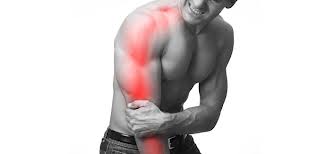
As I correctly predicted yesterday the pain in my left arm hasn’t subsided anywhere near enough for me to post a post of which I’d be happy to put my pseudonym to.

Had I been able to, I would’ve posted about Paul Nutall, the IKIP leader, who today, according to the BBC,

Also suggested the use of internment, would mean the government had the power to detain suspected terrorists indefinitely without trial.Critics say the tactic led to an increase in violence when it was introduced in Northern Ireland in 1971, and it was seen to have acted as a recruiting sergeant for the IRA.
“I think we’ve got to look at ways of ensuring that our people are safe, whether that is a return to control orders, whether that is tagging these people, who knows in the future maybe a return to internment,” the UKIP leader said.
Given the “vast” costs of monitoring a reported 23,000 extremists, he said: “I’m not saying now is the time to return to this, but I wouldn’t rule it out.”
Mr Nuttall also backed waterboarding for terrorist suspects if there was “going to be an immediate attack and people’s lives were on the line” and would support the return of the death penalty in some circumstances.

This is insidiously dangerous,  because whilst UKIP has as much chance of getting anywhere near the levers of government,  as I have of becoming the Olympic 100m champion, nonetheless what might seem an extreme way to deal with extremists today, might easily become gradually become mainstream.

But enough of that.

Instead, let us pause and remember the great John Noakes, the best kind of extremist who died today. In an age when Health and Safety was unheard of, John Noakes was the favourite uncle one never had.  Imagine anyone being allowed to do this today.


My election notes. E-Day – 12

A

The trapped nerve on my left shoulder wishes to extend his most sincere of apologies, as I am not able to extend my arm and therefore by lack of extension, for the absence of any post today. But as less people read this blog than Elizabeth Taylor had husbands, I’m confident that few people will actually be put out.

Yesterday’s blog was – in case you’re interested – dictated by me to my glamourous assistant Julie, whose services I will not to able to avail myself of tomorrow either.

So tomorrow there might not be one either,

Heigh-ho

My election notes. E-Day -13

S

Yesterday proved the rank stupidity and shortsightedness of the Conservative governments energy policy was revealed, as the BBC reported;

A record amount of solar power was generated on Friday as Britain basked in sunshine and temperatures of up to 28C, the National Grid has said.

It said 8.7 gigawatts (GW) had been generated at lunchtime, representing 24.3% of total generation across the UK.

The level tops the previous record of 8.48GW set on 10 May.

Duncan Burt, head of control room operations at National Grid, called it the “beginning of a new era”.

“We now have significant volumes of renewable energy on the system,” he said. “We also have the tools available to ensure we can balance supply and demand.”

So when the Conservative party cut environmental subsidies for to homeowners whilst at the same time give the go ahead to permit large scale drilling for shale oil, UK one has to ask what the frack is going on? At a time when we’re supposed to be reducing our reliance on fossil fuels and instead re-orientating our energy usage towards renewables this makes about as much sense as homeopathy.

Basically none at all.

Because as the Guardian noted;

 The milestone reached on Friday is the latest in a series of records for solar, which has grown from almost nothing seven years ago to 12GW of capacity today. Last summer it provided more power than the UK’s last 10 coal-fired power stations.

In April this year, Britain achieved its first-ever full working day without coal power since it started burning the fuel in 1882, thanks in part to solar energy.

Solar’s rapid growth is overturning conventions for the managers of the UK’s power grid. In March, for the first time ever, the amount of electricity demanded by homes and businesses in the afternoon was lower than it was in the night, thanks to the cut in demand due to solar panels.

This ridiculous state of affairs is further compounded by a the previous governments decision to give the green light plans, not only to upgrade some existing nuclear power stations, but a build a completely new one. Of course it will be expensive both in financial and much more importantly, in environmental terms. Expensive financially because the costs of building it – around £18 – are to be offset by a guaranteed price for the electricity it sells, which as The National Audit Office has pointed out;

Falls in wholesale prices would increase the level of support that consumers provide through CfDs. CfDs fix the cost of electricity from new generating sources so that investments in low-carbon technology are viable. Falls in the market price therefore need to be offset by top-up payments. While this reduces the risks to consumers from price volatility, it means they benefit less from wholesale price reductions.

Which is a polite way of saying that no matter how much the wholesale cost of electricity drops by, consumers using electricity generated at the new nuclear power station will still have to pay the inflated price. The government has promised to buy the electricity at £92.50/ MWh, whereas the wholesale price in April was just over £52/MWh. Since 2010, it has never even cost £70/MWh. Teresa Mays election promise to curb exorbitant energy prices could start with re-negoiating that deal.

This at a time when this country needs a sustainable energy mix, one that is both sustainable in terms of not only environmental impact and cost effectiveness, but also energy security. Ukraine’s troubles with Russia providing a rather frightening example of the perils inherent on being over reliant on energy supplied by another country. Russia has cut Ukraine’s supply of gas three times in recent years, which when you consider that Russia supplies half of all of Ukraine’s gas – and supplies 23% of Europe’s gas. This makes renewable energy even more sensible and foreign ownership of the new nuclear power station either wonderfully optimistic at best or dangerously reckless at worst.


Back to the good news about solar power. Is it just me or does the erosion of the ozone layer mean that the sun’s rays are more powerful because they don’t have to burn through the ozone layer?

I’ll get me coat.

My election notes. E-Day – 14

D

Further to my post yesterday the pain in my left arm has not abated and has if anything increased. So if I were typing this I’d be in excruciating pain by now. Thankfully it’s not me but my glamorous assistant Julie doing the typing.

She did however draw the line at wearing a bikini to do it but hey we can’t have everything…

Say what you will about Jeremy Corbyn, he does like a gamble. To this end he’s massively gambled Labours election chances by criticizing the war on terror, and by implication, blaming British military intervention abroad as being a causative factor in the terrorist attack on Monday. Whilst this is an opinion that I strongly support – and I’m possibly not alone in this – for the vast majority who feel the same, now is not the time to apportion blame. It’s a risky strategy and lays the Labour leadership guilty of using the tragic events of Monday night for their own political ends. By the time you read this, it might have already started. They could easily be accused of ghoulish insensitivity. Some of the more extreme elements of the press might level the charge that he’s in some way giving succor to terrorists by attempting to rationalise their actions

If the Conservative party have any sense they will remain above apportioning blame. They will strive to maintain a dignified and respectful silence on the matter, as if to underline the fact that they are not making the terrorist outrage a party political issue. In so doing it will enhance their reputation as serious minded politicians whom are getting on with the job at hand.

This in turn presents the smaller parties with a problem. After the events of Monday night the electorate will be properly focused on security concerns and not whether or not primary school children continue to have free school meals. They want decisive leadership and they don’t as yet see Corbyn as offering that, It is a truism of electoral thinking that in times of crisis the electorate are not willing to vote for change when they want is political continuity and for better or for much worse that’s what the Conservatives offer.

No matter that the Greens might have an innovative solution for the problems that beset this country at this time, so to might have UKIP. And not forgetting Plaid Cymru. Or the SNP, who haven’t even launched their manifesto yet? As the news media is focused the aftermath of the Manchester attack will their policies get the scrutiny manifesto they warrant.

Isn’t democracy great?

My election notes. E-Day – 15


Had pyhsio yesterday to theoretically help alleviate the pain that my trapped nerve is causing. Ironic then that my left arm is really hurting today – constant shooting pains down the arm, that sort of thing – so even typing this is painful. So rather like the – non UKIP – election campaign, I’ll resume tommorow hopefully


My election notes. E-Day – 16

l

First things first.

What happened in Manchester on Monday night was an outrage. The sudden and violent ending of many lives, with many more wounded, some with life changing injures is something that mere words alone cannot adequately express.

However, this notion – that some tragedy’s are so bewildering enormous in their tragedy that they defy human comprehension – is seemingly beyond most politician’s. Teresa May yesterday could’ve made a speech outside Downing Street briefly expressing her shock and revulsion at the attack and sympathy for those affected, before expounding at length the increased security measures the government was putting in place. But in a telling indictment of the times we now live in, her not doing so, but instead repeatedly expressing sympathy for the victims, revulsion at the perpetrators actions and a determination not to cowed, she would somehow be seen as the embodiment of virtuous human emotion. Does she think that we’ve become so emotionally incapable, so bereft of the ability to articulate how we feel, that we are in some need?

Following the terrorist attack on Westminster Bridge and the Houses of Parliament in March, MP’s were quick to denounce this latest outrage, but were all essentially saying the same thing yet in many different ways. The gist was that the attack was both callous and cowardly, that the people of London stood united and that an attack on Parliament wouldn’t prevent Parliament carrying on as usual. Fine and noble sentiments; if the Speaker of the House had said them to a packed but silent Common’s chamber, and then carried on with the routine business if Parliament. But no. MP after MP made speeches – that to my mind at least – undermined with every word they uttered everything they were saying. For the avoidance of doubt, any terrorist attack, especially one involving the deliberate targeting of children is reprehensible.

Being cynical I have for a long time harboured a suspicion that there is a ready-made emotional response generator that politicians can activate in situations such as these. Rather like this, but reducing heart wrenching suffering into tired cliché. An instant sound bite generator. One that is loaded with stock sincerity and each time it offers up different phrase that can be woven together into a heartfelt statement? I mean, really, who cares what Teresa May, Jeremy Corbyn or Tim Fallon have to say about it? Will they or any other politician offer up anything other than phrases we’ve heard before? Is it that they think that by saying these things they’ll sound like Morgan Freeman, all grim determination and steadfast resoluteness? Will they offer a stunning insight that offers some meaning into the seemingly inexplicable? A pithy but sincere formulation of words that encapsulates a nation’s grief and shock perhaps?

Or will they do what politician’s always do, which is to be seen to be saying the right thing, which – I think –

My election notes. E-Day – 17

It can wait.l

My election notes. E-Day – 18

GR

So Monday brings with it another election treat, in the form of a hasty rethink of Conservative plans to, as the BBC puts it,

 Theresa May has said proposed changes to social care funding in England will now include an “absolute limit” on the money people will have to pay.

The Conservatives ruled out a cap on total costs in last week’s manifesto, instead saying no-one would see their assets fall below £100,000.

The PM defended the “sensible” plan, saying the system risked collapsing.

But she said she wanted to address “shameful” fears that people would be forced to sell their family home.

A rethink that might have been based on the plethora of negative headlines from newspapers that were traditionally Conservative and had an older demographic reading them. It could’ve been that. Or it could have been the fact that whilst house prices have increased since Brexit, as the Guardian reports,

 Asking prices for UK homes hit a new record high over the past month as families in search of bigger properties brushed aside uncertainty caused by Brexit and June’s general election.

Prices sought by sellers rose 1.2% in the four weeks to 13 May, pushing the average asking price to a fresh peak of £317,281, according to the property website Rightmove.

It isn’t a flight of fancy to imagine the European care workers of old people in residential care homes, if they are not guaranteed their right to remain after Brexit, might well return home and therefore increase the cost of residential care home costs by more than any speculative increase in house prices.

Whilst I don’t have a problem with the principle of people making some contribution to their care, I do have a problem with politicians grasping the nettle that is how in a time of austerity we pay for adult social care and then when it gets a bit painful letting go.

Older voters were significantly more likely to vote Leave and now it’s literally payback time.

The law of unintended consequences is wonderful isn’t it!

My election notes. E-Day – 18

EchoChamber

As anyone who’s been following these posts will know, I don’t have an especially good opinion of polls, not just because they were so spectacularly wrong during the last election – although they were – and not just because they manage to base headline grabbing claims out of a statistically irrelevant number of interviewee’s – which I think they do. Nor is it the fact that they dress up all of their guff with sciency sounding assurances that are somehow meant to convince us that their results and actually mean something in the real world.

No what really bothers me about polls is that they’re allowed to be conducted at all. I mean, let them be conducted, fine, let political parties undertake polls to better know which of their policies are playing well to the electorate or not and how they are perceived and the like. But like sex, keep it private.

The problem with polling is, as I mentioned in last Sundays post, the ‘bandwagon effect’, where because people are told something over and over again in the polls, it becomes ultimately self-fulfilling. And as it becomes thus, so the media report on it, rather like an echo chamber. Like an echo chamber the original source is amplified way, way beyond it’s actual significance and as the media report it, it becomes a genuine news story, with no mention in the media of the fact that they’ve helped create the very thing they’re reporting on.

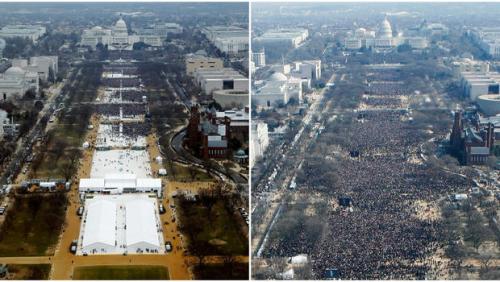
A recent woeful was example set by Donald Trump in his election campaign. It has been variously estimated that he got between $2-5 billion worth of free publicity because of the outrageous comments that he made during the election campaign. Of course, if the media had ignored these, then he would not be president now. But because the news media swiftly reported what he said, and that in turn encouraged other media outlets to do the same, he was able to reach a far greater audience than if his comments had gone ignored or unreported. But the sad fact is that they didn’t. The news needs newness  and and Trump was only too happy to oblige, sometimes even criticizing the very news outlets that were giving him a stick to beat them with.

I’ve long been of the belief that as soon as a general election is called there should be a restriction on the media as to the limits on the reporting of the campaign, not to keep the electorate in the dark, but the opposite. If there was only limited exposure given to only the fact of something happening, rather than endless discussing of what this might mean, bland anodyne reporting instead of increasing biased conjecture wouldn’t that be a good thing? If people weren’t told what others thought but were instead forced to think about what they thought, to examine why they thought what they thought? Why is it that critical reasoning and consequential potentiality have been left to others to frame within their own prism of right and wrong, of what’s good or bad, as if they don’t have their own agenda’s but are merely impartial.

Thankfully we have Chris Morris to illustrate the point.

My election notes. E-Day – 19

H2

Hooray! Let us rejoice! Today is a wonderful day! Henceforth, retailers will no longer be able to sell branded cigarette packets, as a 12-month grace period to allow tobacco firms to phase out old cartons comes to an end. Instead, retailers will only stock plain packets featuring graphic pictures designed to deter smokers. They will also no longer be allowed to stock packets of 10 cigarettes or smaller sizes of rolling tobacco, as part of a package of measures designed to remind us that we are not, as we might foolishly imagine, sentient adults, capable of making rational choices. No we are anything but. And we need to be protected from ourselves.

The problem with this initiative is that it’s indicative of a worrying trend, whereby certain behaviours are deemed to be injurious to health and must be legislated against. But inherent in all this is the fact that received scientific wisdom concerning what is and what isn’t good for us changes. Here’s just a list of some things that were thought bad for us, but are now either not so bad, even good or vice-versa. A comedic example is to be found in Woody Allen’s 1973 film ‘Sleeper’ where Allen plays Miles, the owner of a health food store who is cryogenically frozen in 1973 and defrosted 200 years later in an ineptly led police state. He discovers that foodstuffs considered bad in 1973 are now considered healthy and even cigarettes are seen as healthy

But the here and now, in which we live is fast becoming not so much one where one is able to exercise their own free will, but increasingly obliged to modify one’s bahaviour to appease the will of the state. There are a number of problems with this. Firstly where will it end? A ban on smoking in two places in Bristol was trialled a few years ago, which was after a poll – one of my favourite things – found 61% public support for banning. That poll was of a 1000 people. Hardly justification for banning something that isn’t illegal. Yet. Although Bristol council, emboldened by this ban, is considering issuing contracts for tenants in council houses making it illegal to smoke in them. And not just in Bristol.

And where they have got this idea? Why, in the land of the free, where US public housing agencies have to make all of their properties smoke free by the end of the year. In New York, they’ve already banned it in parks. And might they in turn, get inspired by this guy who this week, according to the Guardian.

Philippines president Rodrigo Duterte has signed an executive order banning smoking in public across the second-most populous country in south-east Asia, creating one of the region’s strictest anti-tobacco laws.

The ban, which carries a maximum penalty of four months in jail and a fine of 5,000 pesos ($100), covers both indoor and outdoor smoking, presidential spokesman Ernesto Abella said on Thursday.

Duterte was himself a heavy smoker but quit when he was diagnosed as suffering from Buerger’s disease, which can cause blockages in the blood vessels.

Which of course makes one think of a former smoker, who led his country on zealous anti-smoking initiative, one of many of his health initiatives. A very successful one, apparently. His name was Adolf Hitler, so when people call those who wish to use the law to promote their own health agenda by banning some things and restricting others ‘health Nazi’s’, they aren’t so wide of the mark.

It’s not that I’m pro-smoking but rather that there are other things that pollute our air and causes deaths as smoking, but it isn’t so easy to legislate against.