the brilliantly leaping gazelle

Category: My Election Notes 2017

My election notes. E-Day – 37
800px-AIBF_Mass_Ascent,_2007

If the news that Cornelia Parker is to be the official election artist didn’t take you by surprise, then the chances are that you knew we have we had one for the last five general elections. However I had been wholly unaware of this – like most people I’d wager – and this raises a whole slew of questions; namely why in the name of sanity do we need one and if – IF – we do, then why does she need to be paid £20,000?

The BBC stated;

 She will observe the election campaign, which culminates in the vote on 8 June, and produce a piece in response.

The official election artist is chosen by the Speaker’s Advisory Committee on Works of Art, and Parker will have to complete the piece by early September.

However, as expected The Guardian was suitably respectful of this news, clearly thinking it to be A VERY GOOD THING INDEED and not as massive insult from self-proclaimed cultural commissars who pronounce upon whether art is indeed art and not just random bits of stuff given a profound meaning to justify it’s expensive price?

I mean when does a limerick become a poem? When does a child’s finger painting become abstract expressionism? And why, when I think of abstract art so I always think of the following quote . “Abstract art is the product of the untalented, sold by the unprincipled to the utterly bewildered.” Is really all you need copious amounts of elegant chin stroking flannel to convince people that what you produce has meaning?  And do artists visit this site when they can’t think of of seemingly profound nonsense?

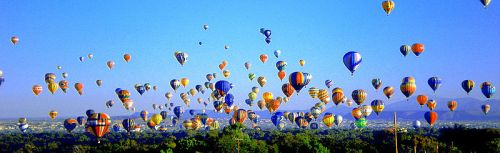
Carmella Parker is, the Guardian claims in its puff piece on her appointment, ‘a conceptual artist’? So will the work she produces in response to the election be a room full of thousands of small helium balloons to represent the potentially inflammable nature of words/ Or the ephemeral nature of meaning? Given that once had the army blow up a shed in order for her to make some art, that doesn’t seem too implausible.

Or just a cavernous white room with nothing in it except for a small blower pumping hot air into it?
My election notes. E-Day – 38

in-a-world-of-upward-mobility-choose-downward-servility-quote-1

Today some parents released photographs of their two-year-old daughter. Whilst there’s nothing intrinsically newsworthy about that, the fact that she is the daughter the Duke and Duchess of Cambridge renders it so to some media lickspittles.

The BBC reported that:

In the image, Charlotte is wearing a knitted yellow cardigan with a sheep motif and a navy blue clip in her hair.

Helpfully describing something we could see, mind you, they weren’t alone in this. This is from The Daily Telegraph;

She is pictured at their Norfolk home Anmer Hall, wearing a yellow cardigan, decorated with images of sheep, while she sports a navy clip in her hair.

Not be out-toadied, the BBC thought we might like to know that;

The family is expected to throw a birthday party for the Princess.

I know! Shocking news! Parents expected to throw a birthday party for their child! No parent in the history of ever has done that!

But no newspaper makes so much story of so little fact – especially when it concerns the Royal family – as the Daily Mail.

Children’s party planner Antonia Voss has revealed to FEMAIL what she predicts from the princess’ second birthday celebrations.

Antonia believes the Cambridges may also opt for a teddy bears’ picnic-themed party – weather permitting – with plenty of cakes, jelly and ice cream.

If that doesn’t sound grand enough, her fee for this guesswork demands more conjecture;

But given the little Princess’ love for animals, she might prefer an wildlife-themed party.

‘A professionally-run petting zoo with lambs, chicks and rabbits, tractor rides around the grounds and a puppet theatre complete with hay bale seating could make for a really memorable day,’ says Antonia

Foolishly I’d imagined we’d grown out of all this bowing and scraping to those whom certain sections have deemed more worthy than others. The Daily Mail, along with the Telegraph and the BBC all run stories about benefit cheats, but the right sort of benefit cheats. The poor, the weak and those who exist of the margins of society, convenient scapegoats of press opprobrium. But if you live at the other end of the social spectrum, as do the Royals – themselves living a lavish taxpayer funded lifestyle – then the press offer slavish deference.

This attitude that some are better than others or that some are just born leaders, because of an accident birth – being born to the right person is something I see in my mother and brother when they talk about politics. Or rather, they talk about politics in much the same way toddler given a T.V. remote control will change channels. They see everything as a single issue, unrelated to any other, they don’t join up the dots, because they don’t know there are any dots. Not that I see them all, but I know what I don’t know. And I don’t know what I don’t know.

A bit like Donald Rumsfeld.

As far as they’re concerned the Royal family are just better than everyone else in much the same way asTeresa Mat is just better than Jeremy Corbyn.

My election notes. E-Day – 39


On Thursday, the BBC reported that

Almost all universities in England will be able to introduce annual increases to tuition fees until 2020, in a deal pushing legislation through Parliament before the general election.

The higher education legislation had been intended to make higher fees dependent on improved teaching. But this will now not be implemented until 2020-21 – and until then universities can make inflation-linked increases without any link to quality.
Fees will increase to £9,250 this year.

Student loans to pay for the higher fees are already going to be subject to a sharp increase in interest rates – rising from 4.6% to 6.1% from the autumn.

Meanwhile, Armando Iannuci, writing in todays Observer notes that whilst around 75% of penners are likely to vote in this election, only 42% of 18 – 24 year olds are expected to to do the same. He makes the point that this perceived apathy of one section of the electorate to bother to vote means that politicians will skew their policies towards those who will.

But the reality is this is an act of protest that immediately becomes a self-fulfilling prophecy. It’s no coincidence that the collapse in the 18- to 24-year-old vote has seen the advent of tuition fees, reductions in housing benefit for 18- to 21-year-olds, the scrapping of the education maintenance allowance, no entry to the “national living wage” until the age of 25, and cuts to student disability allowances.

If politicians aren’t afraid of a kick in the ballots from the young, then they aren’t afraid of any adverse consequence. I don’t believe in conspiracy theories – no-one has ever been strategically organised to that extent – but I do believe in the law of unintended consequences. Therefore, if someone leaves university with a huge debt, they’ll be mindful of that debt and might be more willing to accept a job with onerous pay and conditions. Once they have a job, they’ll be scared of losing it, making them even them even more compliant to an employer. State benefits – some of them, anyway – will be cut, on the grounds the state is no longer able to afford them, which makes a having a job both even more precious and worth safe-guarding at any cost.

However, the sun is out, it’s a glorious blue sky day here in in Southwold, where I’m on holiday and if it’s a choice between being outside or continuing to write this, well.

My election notes. E-Day – 40

PS

There is going to be much talk in this election from everyone with an opinion about voter engagement. Or rather the lack of it. Political leaders, media verb whores and assorted formers of this and that will all decry the lack of it, wring their hands forlornly and wish it wasn’t so, as if somehow they hadn’t helped create the very thing they bemoan.

It’s a bit like a condom manufacturer complaining about people having too much sex.

Part of the problem is that people have become increasingly disillusioned with the political process itself, feeling that whatever they do, it will have negligible benefit on their lives. Academic studies have conclusively proved that if a person hasn’t voted as soon as they entitled to, they are likely never to. So engage them young and make it relevant to them in ways they can understand, not have some old – to a child anyway – stuffed skirt banging on about something of no tangible consequence to them. Because, as the Jesuits would have it, if you gave them the child at seven, they’d give you the man.

Not that you’d want to give a child to a priest, certainly not now.

One way to help foster enthusiasm for the democratic process is in the choice of polling stations. A primary school that used to be opposite a house I used to live was always used as one. But what if all polling stations were situated in primary schools? I mean what child doesn’t like a day off school? As elections are usually held in late May, there’s every possibility of it being a nice day. If when an election was announced every primary school child in each constituency had to write a letter explaining why their school should be used as a polling station? And all those letters were put into a giant drum and one lucky letter was pulled out? And that primary school was one of the polling stations for that constituency?

It would make it more relevant and at the same time be used by teachers as a way in to teach about the importance of democracy, it’s benefits and why the powerful have only with great reluctance and by increments widened the franchise. Secondary school children could do the same for local elections. It’s certainly no more preposterous an idea enthusing the unenthused than some you’ll hear in the coming weeks! Because, we all of us, look to see what’s in it for us if we do something; lofty aims and social fairness are great and everything.

But what is more beneficial to a child; the vote or the school being closed

My election notes. E-Day – 41

bomb

Perhaps it’s only me, but whenever I think of party leaders, I think of someone who you’d want to be responsible for others having the best possible time at a party. Someone who would lead the party, who not only exuded fun, but also reveled in others having fun. Someone who knew what constituted a party and made it happen. Ideally, someone who would anticipate every conceivable want and provide it. Someone who leads the party by example by not just going for it but getting there as well.

Not the austere ‘fun’ of a dinner party where everybody is on their best behaviour, makes polite comments about the food, doesn’t drink too much or monopolise the conversation or shares opinions that are met with a stony silences and heated arguments on the way home.

Or the ‘frugal’ fun of a party that is a party in name only, one where the ambient police have strictly enforced their own laws and turned the music right down or worse still, put on something that doesn’t encourage horizontal gymnastics, and turned up all the lights and left monitors to ensure that things don’t do back to how they were before they arrived.

But parties where as soon as you get there you regret not having arrived earlier.

Does anyone think that Teresa May fits that description of a cheeky funster; one full of mirth and good-natured japes to amuse and entertain? And not like the person who imagines themselves to be the life and soul of the party and yet are anything but, either? How many of us think that a party hosted by Jeremy Corbyn would consist of a lentil and mung bean stew, and a discussion about how we should all be thoroughly ashamed of ourselves for having the audacity to enjoy ourselves while people in Syria were not.

And not that drugs are essential pre-requisites for having a good time at a party, I mean we all know that the best parties are the ones without any alcohol. But I bet you that if you handed Tim Farron an empty glass bong, he’d think it was a musical instrument and try to play it.


My election notes. E-Day – 42

907394-bigthumbnail

Jeremy Corbyn yesterday at the last Prime Ministers Questions before the election claimed that ‘he will always stand up for the many and not the few. That is real leadership.’

Er, not in my book it isn’t! Leadership is when you stand for what you something you instinctively believe to be right, even if the majority disagree with you – and here comes the important caveat – and having the courage to admit you were wrong when presented with conclusive evidence that rubbishes your previous position.

Or championing the rights of the few when the majority screams otherwise. One only needs to look back in our recent past to see how much the prevailing social orthodoxy has changed over time. So what was acceptable then is abhorrent now.  Leadership is about being slightly ahead of the curve.

Supporting that the majority want isn’t leadership; it’s the very opposite of it. It’s pandering to the mob.

And we wouldn’t want Don Corleone to be be our next P.M?

Mind you, writing about Don Corleone puts me in mind of Tony Blair, who has today rather helpfully refused to endorse Jeremy Corbyn for P.M. I mean would you want Tony Blairs endorsement for anything? I bet the Corbyn camp are delighted with the news! Tony Blair has as much credibility with Labour voters as a parent who says to a child with a grazed knee, just before applying some anti-septic “Now this might sting a bit.”


My election notes. E-Day – 44


Playground

One of the more curious aspects of this snap General Election was how it completely surprised everyone.

No-one saw it coming. Not the legions of political pundits, who often act as intermediaries for ‘ sources close to’, not the journalists who offer instant opinion, now even more instant in this age of social media. Not even the upper echelons of her own party knew. Even though Teresa May presides over a Conservative party with seemingly unassailable lead in the polls over Labour – and the polls are never wrong are they – it was assumed that much commented upon caution would prevail. And prevent her from doing what she has just done.

That’s what I find so curious. I mean not letting any of the opposition parties know until you announce it, fair enough. I mean you wouldn’t tell a bank you were going to rob them, but you’d tell the people who needed to know, perhaps not the exact time, date and location but let them know to expect something. The people supplying the cars, those providing safe houses, fences if emptying deposit boxes was involved, the people who needed to know in advance.

But no.

She didn’t.

But then given the ludicrous manner of her becoming PM in the first place, is it such as surprise? Remember the morning after European Referendum? When we awoke to discover that the country had voted to leave Europe? One might have thought the Leave campaign would immediately effect a seamless and a well thought through plan to ensure stability. To provide reassurance to those who had voted to Remain that the sky wasn’t going to fall in. To offer reassurance to our allies and to the global financial markets, to offer some vestige of competent leadership, giving the impression of calm, sober efficiency and business as usual. But rather the leaders of the Leave campaign spent the weekend after the vote quietly promoting themselves as David Cameron’s successor whilst publicly disavowing any such intention.

Eventually we ended up with Teresa May, a bit like at school when teams are picked in the playground and all the best players have been chosen and on it goes until only the rubbish ones that no-one wants are left.

That’s Teresa May.


My election notes. E-Day -46

mainToday is a day of two polls, which together illustrate how political polling has as much credibility as shampoo adverts.

Today there is a poll in the Daily Mail that carries the shock news that;

Theresa May’s hopes of winning a landslide election victory suffered a major blow last night after her poll lead plummeted to 11 per cent amid the row over her tax and pension plans.

A Survation poll for The Mail on Sunday put the Conservatives on 40 per cent, followed by Labour on 29 per cent and the Lib Dems and Ukip level on 11 per cent.

It means Mrs. May’s lead over Jeremy Corbyn has nearly halved in four days: a poll immediately after she called the Election gave the Tories a 21-point advantage.

However, there is another poll, first published on the Guardian homepage as a top story, but now relegated to the politics page announcing the equally shocking news that

The Tories have more than doubled their lead over Labour to 19 points since Theresa May called a snap general election last Tuesday, according to a new poll that suggests theConservatives are heading for a landslide victory on 8 June.

Confused? Possibly, if one only reads the headlines and the first paragraph of each story. Although the Guardian to be fair does point out in the second paragraph:

The survey by Opinium for the Observer, conducted on Wednesday and Thursday of last week, puts the Tories on 45% (up seven points compared with the previous week), while Labour is down three points on 26%.

To be fair? Sorry, I meant to be vague. At least the Daily Mail put the Guardians poll in a slightly more understandable context;

Last night an Opinium poll, taken before the tax, pensions and overseas aid row, put the Tory lead at 19 points.

So who to trust? It’s a tough one! But earlier on I mentioned shampoo adverts? You know, the ones on the television that claim that 93% of women agree that this shampoo is the best shampoo in the history of ever? And for a few seconds you think ‘ Wow! 93%. That’s impressive.’ But then reason and logic kick in. And you see that buried in the smallest possible writing is the revelation that only 200 women were asked if they agreed. And you wonder how such a big claim could be based on such a little sample. Who, for example are these women?

And then you start to question the validity of ALL polls, realizing that the sample of people questioned in survey is low – in both cases above less than 2100 – and remembering that at the last election in 2015 pretty much every poll got it wrong!

My election notes. E-Day -47

The last couple of days have required some deft footwork from Phillip Hammond, the man who puts chance into Chancellor. In refusing to rule out an income tax increase and increase in VAT yesterday, he was probably remembering the humiliating climb-down over plans in his budget to increase National Insurance Contributions for the self-employed. Unfortunately, the last Conservative manifesto explicitly stated that they wouldn’t. Hence the climb-down and his reluctance to make any pledge that might bedevil him later.

If only Teresa May had been as cautious and had been paying attention to Parliamentary debates and what her Ministers say. When asked about her commitment to protecting the triple lock – introduced in 2010 and which guarantees that the state pension will rise by the rate of average earnings OR the Consumer Price Index OR 2,5% whichever is the highest- she said yesterday:

 All I would say to pensioners is just look at what the Conservatives in government have done.

However she stopped short of any pledge that she could be held to, which is an electoral gamble because pensioners are the demographic most likely to vote but against that but pensions amount to a whopping £92 billion of the welfare budget. And the population is ageing, meaning not only are there more pensioners, but those that there are are living longer.

But on Thursday, – the day before she invited pensioners to examine the governments record – in a debate about pensions, the issue of annual uprating of pensions for pensioners who’ve emigrated came up. At the moment where you move to depends on how much you get. Some have theirs annually uprated, whereas some have them fixed at the amount the pension was worth when they left. Which depending on where they’ve emigrated to, could be a substantial amount indeed. Richard Harington, the Pensions Minister uttered a stark reminder of exactly where this governments priorities lie.

The governments position remains consistent with that of every government for the last seventy years and the annual cost of changing a long-standing policy will soon be £0.5 Billion which the government believes cannot be justified.

My daily election notes. E-Day – 48

clear-bar-of-soap-with-a-razer-blade-inside-thumb

One of the less edifying effects of Teresa Mays decision to call a snap election hasn’t been to cause the Labour MP Clive Lewis to postpone his marriage – his honeymoon was booked for June 6th – but rather what in parliamentary terms is called the ‘wash-up’.

Basically the ‘wash-up’ puts me in mind of schoolchildren with an essay to complete who, because the sun is inviting them out to play have left it until a few days before the essay is due in to start writing it. With a panic they realise that their answer will inevitably involve lots of detail to digest, understand, consider and formulate a coherent answer. But far too much detail than the time available to them allows. So they do the only thing they can do. They cherry pick details and pad those details out. Or at least they hope they cherry pick.

That’s the problem with cherry picking, one isn’t always certain that the only the sweet cherries have been picked; if one does it in a rush, then in all probability one will end up with some sour ones. As a way to write an essay it’s not ideal.

But as a way to create legislation it’s insane.

The Finance Bill 2017 will be rushed through the Commons and the Lords so it can be enshrined in law before parliament breaks. Whilst there are some important tax blah in it, the bill runs to 700 pages. Time means that only the most important will make it in to a slimmed down bill for parliament to pass into law. It also doesn’t allow for any scrutiny or for someone to say ‘Hang on, you’ve left all these things out and left that in. Explain you’re reasoning’

It’s as if the Dangerous Dogs Act fiasco never happened

Until tomorrow.